- All products are added to your cart.
1 / 1
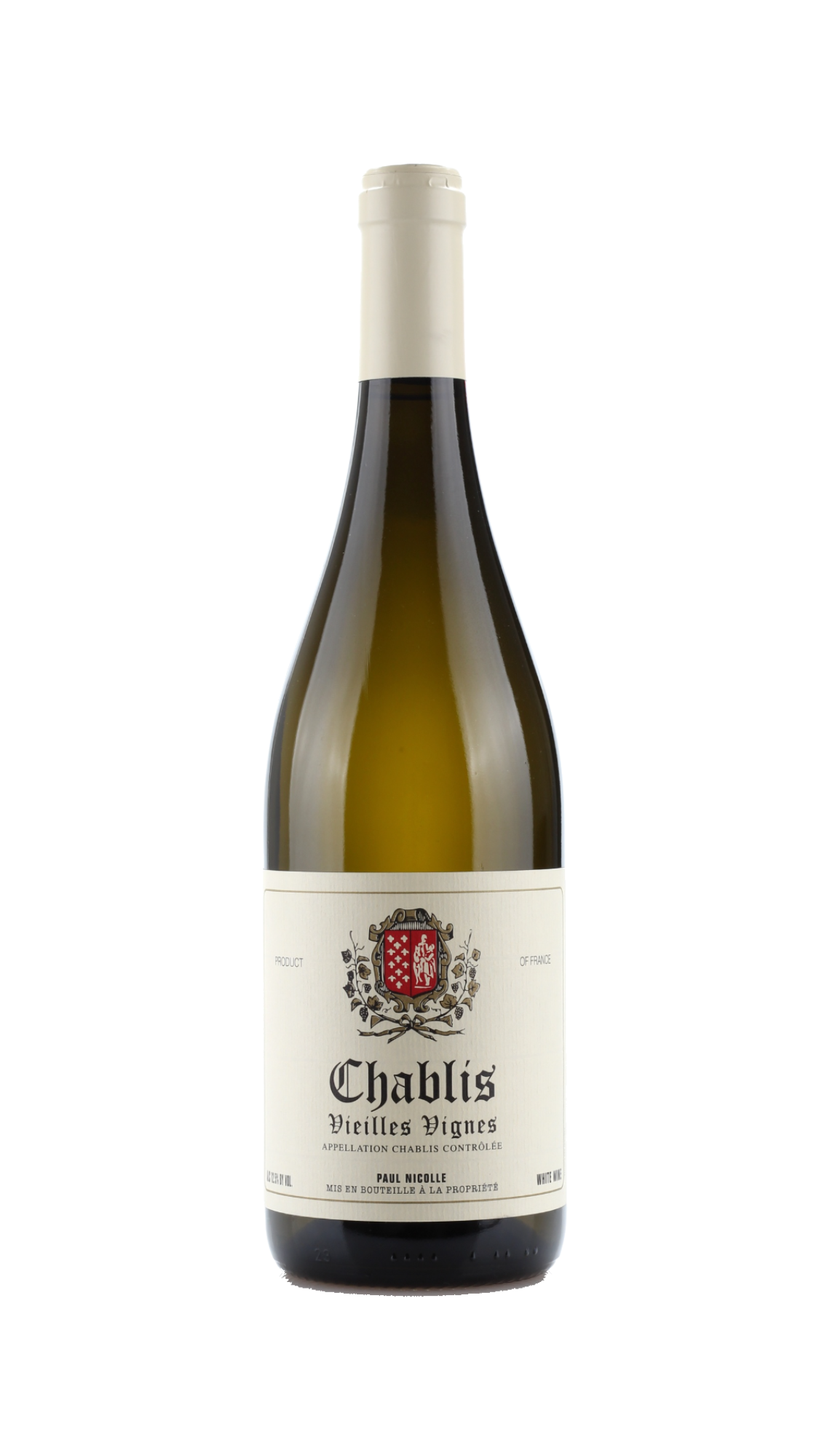
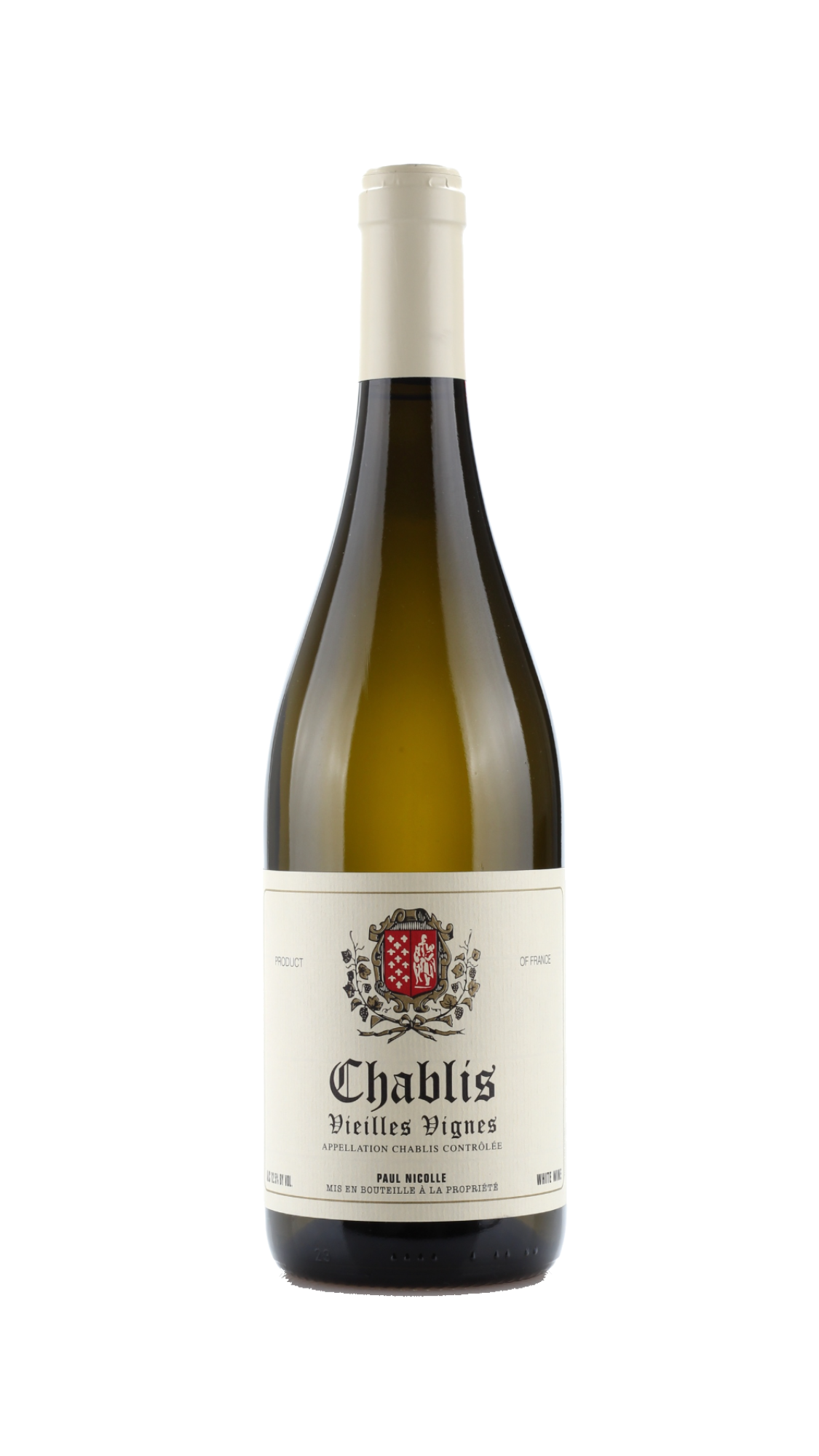
Domaine Paul Nicolle Chablis Vieilles Vignes 2024
$34.00
($34.00 Before Tax)
-
0 reviews

Old-vine Chablis from a family farming Fleys since the 19th century. Kimmeridgian limestone, 30-year vines, lees aging in stainless — this is what Chardonnay does when the soil does the work.
Available in store: Check availability
Description
Domaine Paul Nicolle, rooted in the village of Fleys since the late 19th century, makes the Vieilles Vignes from 30-year-old vines across four communes, aged on lees in stainless steel for up to a year. The result is Chablis at its most textbook and most compelling: crisp, mineral-driven, and unmistakably itself.
Quick Facts
- Region: Chablis AOC, Northern Burgundy, France
- Variety: Chardonnay, 100%
- Style: Dry, mineral-driven white; unoaked, Kimmeridgian limestone character
- Best For: seafood dinners, oyster pairings, refined corporate gifts, white Burgundy exploration, summer entertaining
- ABV: 12.5%
- Farming: HVE certified (High Environmental Value)
- Drinking Window: 2025-2030
Why We Love It
Paul Nicolle is our house Chablis for a reason: Charly Nicolle's approach — four communes, south-facing limestone parcels, lees aging, no oak — delivers Premier Cru-quality texture at village-level pricing, consistently vintage after vintage. The Vieilles Vignes designation means older vines, more concentration, and a mid-palate richness that separates it from generic entry Chablis. For guests who want a white wine that genuinely reflects its origin, this is it.
Tasting Profile
Precise and mineral — the kind of white wine that tastes like it came from a specific place, not a winery.
- Aroma: Lemon zest, green apple, subtle pear, white florals, and the distinctive oyster-shell mineral note that is the hallmark of Kimmeridgian limestone Chablis
- Palate (Flavor): Crisp apple and citrus, honey and almond nuance in the mid-palate, bright mineral salinity, subtle chalky texture from lees contact
- Structure & Finish (Mouthfeel): Bright, clean acidity; medium body with a richness on the mid-palate that recalls Premier Cru quality; medium-long finish with persistent mineral and citrus pith
Winemaking
Fermented in stainless steel with a combination of native and selected yeasts depending on the vintage — a decision that allows each year's fruit character to express naturally. Aged on the lees for 8-12 months entirely in stainless steel, with a small proportion (approximately 10%) spending time in used barrels; the lees contact adds texture and mid-palate weight without introducing oak flavor. The Vieilles Vignes cuvée is assembled from multiple parcels across Chablis, Fleys, Chichée, and Béru, blending the liveliness of younger vines with the concentration of older ones to achieve the balance Charly Nicolle describes as the signature of this wine.
Serving & Pairing
Serve at 48-52°F.
Oysters and shellfish are the textbook match — the wine's saline mineral character is an extension of that flavor conversation. Also outstanding with flaky white fish (sole, halibut, striped bass), fresh goat cheese, sushi and sashimi, and light seafood pasta. The wine's firm acidity cuts through any dish with richness or brine.
Perfect For: oyster dinners, seafood occasions, refined corporate gifting, white wine enthusiasts, summer dinner parties, Francophile guests, approachable fine wine gifts, food-and-wine pairing nights
Drinking Window
The 2024 vintage is drinking well now and will continue to develop through 2030. At current stage, the wine shows the freshness and mineral precision that define young Chablis. With 2-4 years in the cellar, the oyster-shell and floral notes will deepen, the mid-palate texture will fill in further, and the citrus will move toward more complex stone fruit. Best consumed within 5-6 years of vintage for this style.
Vintage
2024 was a challenging year in Chablis, with significant spring frost and hail reducing yields across many estates. For the producers who managed their vineyards through the difficult conditions, the very low yields concentrated what remained — and the vintage shows good minerality and natural acidity. Jasper Morris and other Burgundy specialists have noted the vintage's similarities to 2016 in mineral character, with wines showing tension and purity. Paul Nicolle's HVE-certified farming and multi-commune sourcing provided meaningful resilience through the season.
Estate Overview
Domaine Paul Nicolle is rooted in the village of Fleys, four kilometers from Chablis, where the Nicolle family has been farming since the late 19th century. The domaine as a commercial enterprise was established in 1979 by Robert Nicolle and Josette Laroche; their son Charly joined in 1999 after graduating from the lycée viticole, and now runs the estate. Charly's wife Lucie Thiéblement — formerly a chef at the Cote Saint-Jacques, a Michelin-starred restaurant nearby — works alongside him at the winery. The domaine covers 20 hectares, with its largest holdings in Chablis AOC centered around Fleys, including parcels in two Premier Crus: Les Fourneaux and Mont de Milieu. Farming is certified under HVE (High Environmental Value). The estate is imported to the US by Paris Wine Company, whose portfolio is built around exactly this kind of family-scale, classically-minded Burgundy domaine. We carry Paul Nicolle as the house Chablis because no producer at this price point delivers more consistent mineral precision.
Terroir (Place)
Chablis sits at the northern edge of Burgundy, 100 miles north of Beaune, in conditions closer to Champagne than to the Côte d'Or. The appellation's defining geological feature is Kimmeridgian limestone — a Jurassic-era marine sediment layer approximately 155 million years old, packed with the fossilized remains of small oysters (Exogyra virgula). This fossil content is not a metaphor: the saline, oyster-shell minerality distinctive of Chablis is a direct sensory expression of these ancient marine soils. Paul Nicolle's parcels are concentrated around Fleys and three neighboring communes — Chablis, Chichée, and Béru — all situated on south-facing Kimmeridgian limestone exposures. The combination of this soil type, northern climate, and 30-year vine age produces a Chardonnay with natural acidity, mineral precision, and a textural density that warmer-climate Chardonnay does not achieve.
Reviews