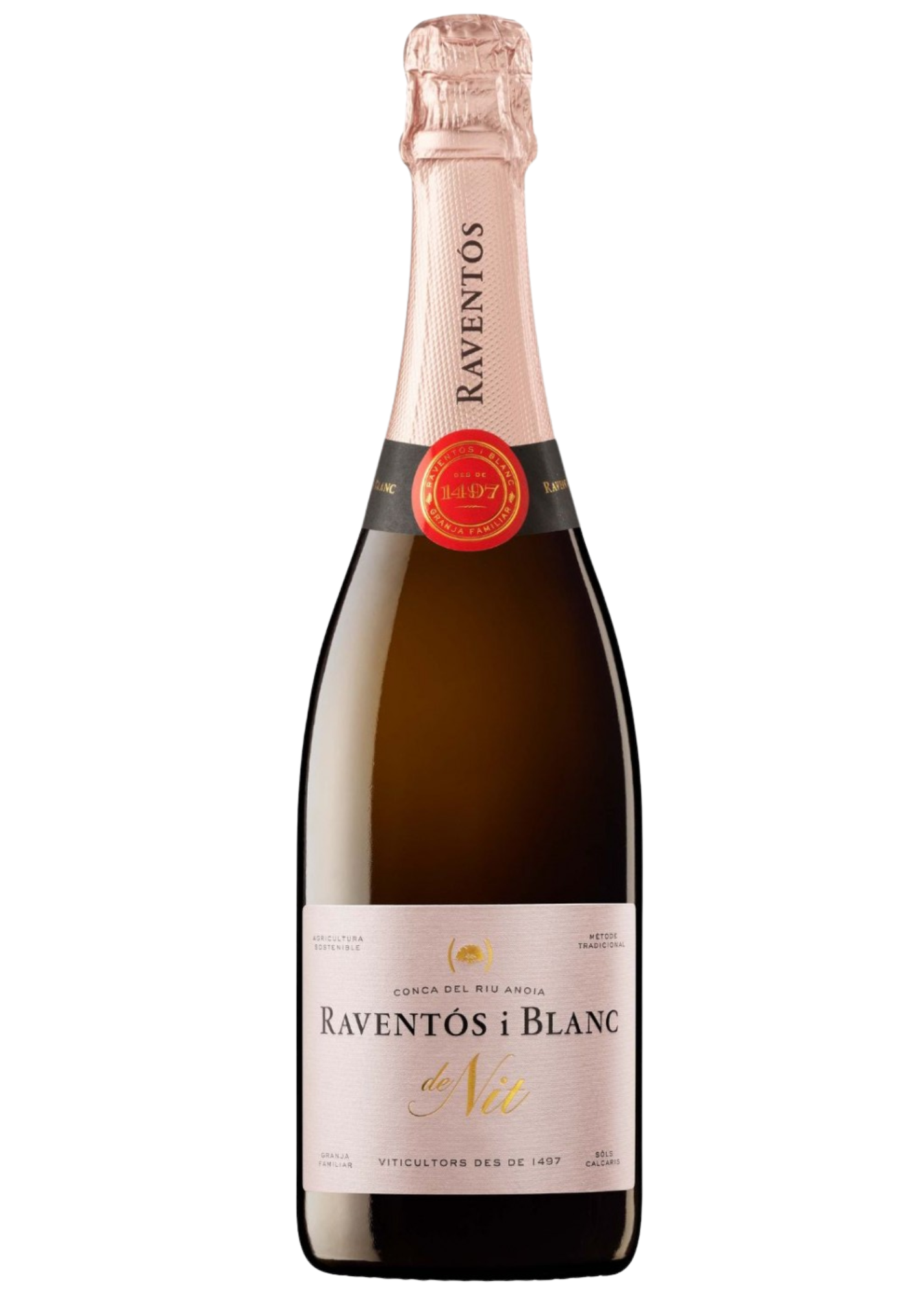
Raventós i Blanc has farmed the same estate in Sant Sadurní d'Anoia since 1497, and in 1872 produced the first bottle-fermented sparkling wine in Spain — the wine that eventually became Cava. In 2012, the twenty-first generation walked away from the DO they helped create, concluding that the denomination's tolerance for mass-production and non-estate fruit no longer reflected what they believed wine should be. The de Nit is the estate's sparkling rosé: native Catalan varieties farmed biodynamically, vinified parcel by parcel, and aged 18 months on lees. A small addition of Monastrell gives the wine its pale copper-pink color and a faint red-fruit dimension; everything else — the mineral salinity, the dry chalky finish, the fine mousse — comes from the estate's 16-million-year-old marine soils. Wine Advocate called it "more than a rosé," and the glass confirms it.
92 pts Wine Advocate | 92 pts Vinous
Quick Facts
- Region: Conca del Riu Anoia, Penedès, Catalunya, Spain
- Variety: Xarel·lo 49%, Macabeu 34%, Parellada 9%, Monastrell 7% (approximate; parcel-dependent by vintage)
- Style: Extra Brut sparkling rosé — bone dry, 4g/L residual sugar; traditional method, pale and mineral
- Best For: refined gifting, aperitif entertaining, wine enthusiasts, Spanish food occasions, holiday gifting
- ABV: 12.5%
- Farming: Certified biodynamic (Demeter, since 2013); certified organic since 2009
- Drinking Window: 2025-2028
Why We Love It
Most sparkling rosé is made to look festive and taste approachable. The de Nit is made to taste like where it comes from. The Monastrell addition is minimal by design — enough for color and a whisper of red fruit, not enough to shift the wine away from the mineral, saline character of the estate's Kimmeridgian-influenced soils. If the Blanc de Blancs is the purist's statement, the de Nit is the version you open when you want that same precision with a little more warmth in the glass.
Tasting Profile
Pale copper-pink, crystalline, and precise — less a rosé than a Blanc de Blancs with a faint blush and a hint of red fruit in the room.
- Aroma: Light citrus, red flowers, wild strawberry, white peach, smoked almond, broom blossom; subtle caramel and herbs from lees aging; the Monastrell adds a faint cassis note without dominating
- Palate (Flavor): White cherry, peach skin, lemongrass, mineral salinity; clean and focused mid-palate very close to the Blanc de Blancs in profile — the red fruit is an accent, not the headline
- Structure & Finish (Mouthfeel): Fine, raw-silk mousse; vibrant, well-cut acidity; dry and chalky finish with a touch of grip from the Monastrell skins; Extra Brut — 4g/L residual sugar, effectively bone dry
Winemaking
The white varieties are fermented separately in stainless steel with native yeasts; Monastrell is added in small proportion for color before assemblage rather than co-fermented, which preserves the pale hue and limits skin extraction. The wine undergoes a second fermentation in bottle and ages on lees for 18 months — the same protocol as the Blanc de Blancs — producing the fine mousse and mineral complexity in the final wine.
Serving & Pairing
Serve at 44-48°F. No decanting needed.
Outstanding with raw bar seafood, oysters, anchovies, jamón ibérico, grilled langoustines, fresh sheep's milk cheeses, and light charcuterie. The dry, mineral profile also makes it one of the better sparkling wines at a dinner table — versatile enough to carry through multiple courses.
Perfect For: refined gifting, aperitif entertaining, Spanish food occasions, oyster and seafood dinners, wine enthusiasts, sophisticated corporate gifts, summer celebrations, holiday gifting
Drinking Window
The 2023 is drinking well now and will hold through 2028. The pale red-fruit notes are most vivid in the near term; with a year or two additional bottle age the mineral and lees character will become more prominent as the fruit recedes. Best consumed within 3-4 years of disgorgement.
Estate Overview
Raventós i Blanc has farmed in Sant Sadurní d'Anoia since 1497 and produced the first bottle-fermented sparkling wine in Spain in 1872 — the wine that became the foundation for the Cava denomination. In 2012, Pepe Raventós (21st generation) left the Cava DO to pursue a stricter standard under the Conca del Riu Anoia designation: 100% estate fruit, indigenous varieties, biodynamic farming, and vintage dating. Today the estate farms 44 plots using animal traction, holds Demeter certification since 2013, and is widely regarded as the most principled sparkling producer in Spain.
Terroir (Place)
The Conca del Riu Anoia sits in the Penedès region of Catalunya, approximately 40 miles west of Barcelona, on marine soils deposited roughly 16 million years ago. The elevated fossil and carbonate content of these ancient seabed terraces is the direct geological source of the wines' saline character and chalky finish — qualities that distinguish this estate from Cava producers drawing fruit from across Spain. All fruit for the de Nit, including the Monastrell, comes from within the same biodynamically farmed estate.