- All products are added to your cart.
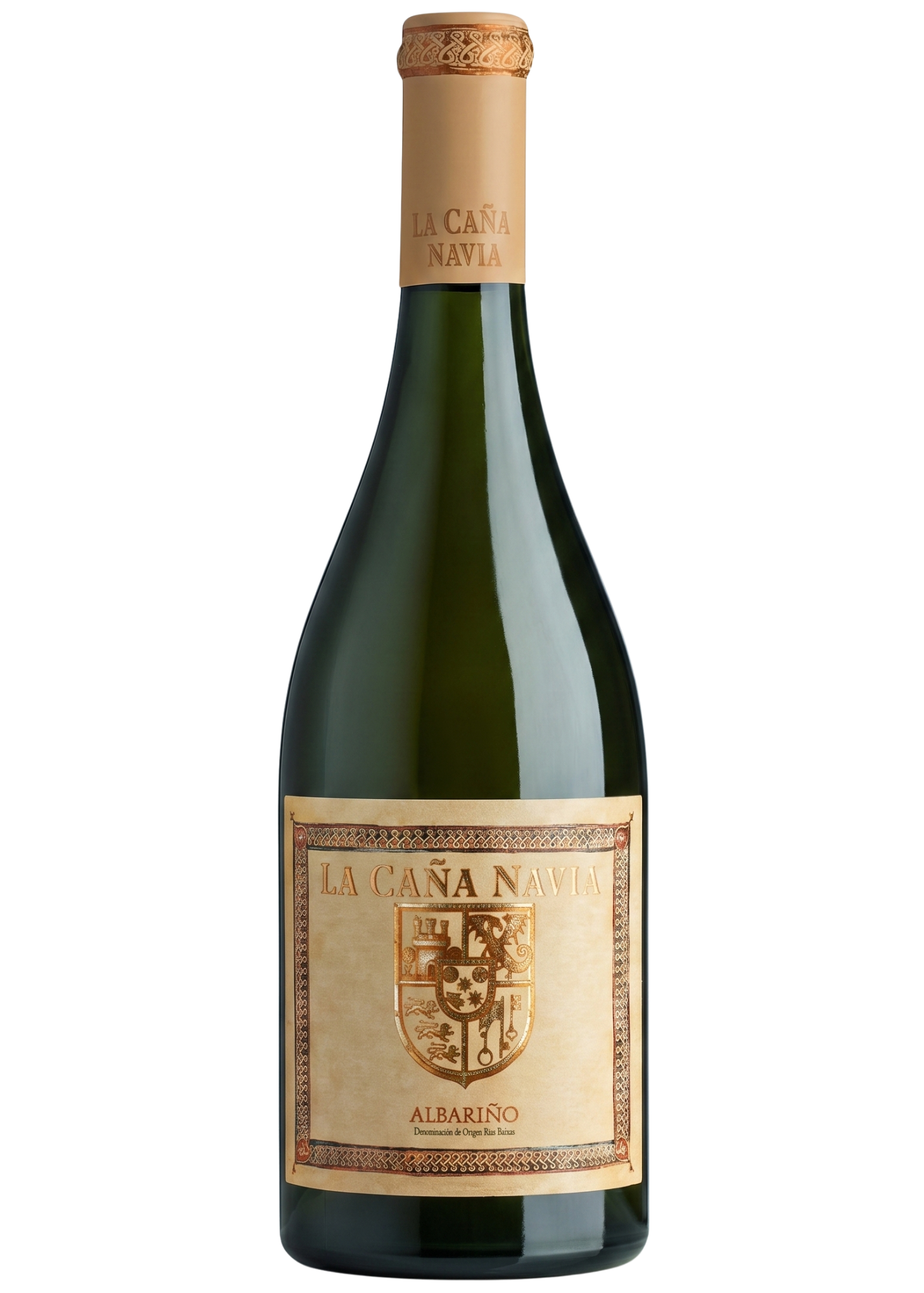
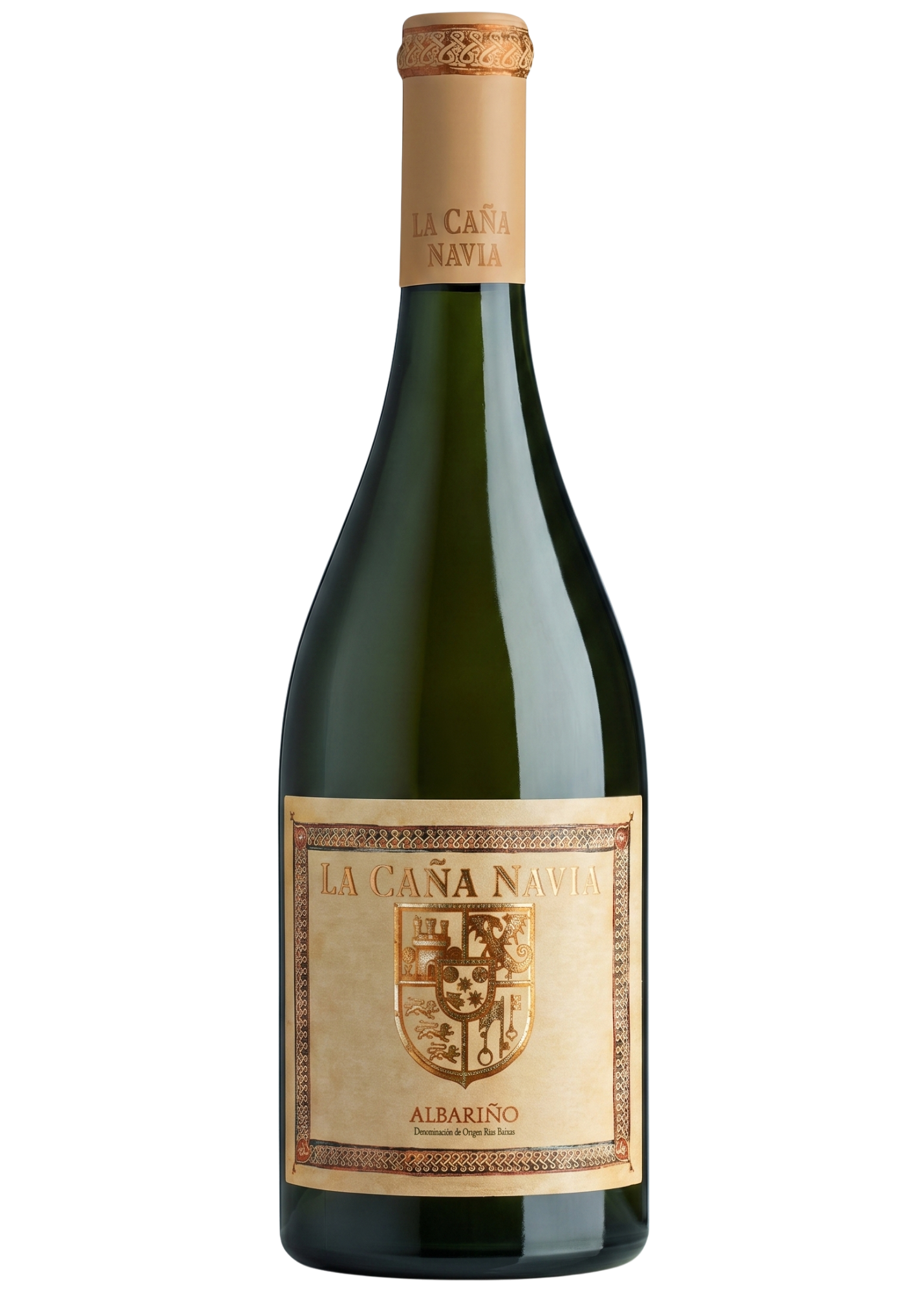
Bodegas La Caña 'Navia' Rías Baixas Albariño 2023
-
0 reviews
Description
Navia is Albariño with more weight than the category usually gets credit for. It still has the Atlantic freshness you want from Rías Baixas — citrus, green apple, pear, and saline snap — but the old-vine Salnés fruit, large-format wood, and lees aging give it a creamier, more structured feel.
Think of this less as a porch-pounder Albariño and more as a serious coastal white: bright enough for oysters and seafood, textured enough for richer shellfish, roast chicken, or white Burgundy drinkers looking for something new.
Quick Facts
- Region: Valle de Salnés, DO Rías Baixas, Galicia, Spain
- Variety: 100% Albariño
- Style: Dry white, oak-fermented, textured and structured
- Best For: Seafood dinners, date nights, wine club gifts, guests who know Albariño and want to be surprised
- ABV: Approximately 12.5%
- Farming: Practicing organic
- Drinking Window: 2025–2038
Why We Love It
This is the wine that answers the question most guests don't think to ask: what does Albariño taste like when it is made the way it was before the modern style took over? Oak-fermented from old vines on granite-decomposed soils, the Navia is creamy, precise, and Burgundian in register without losing the variety's coastal minerality. A 94-point Galician white with a twelve-year drinking window is not a weekly white — it is a discovery worth sharing.
Tasting Profile
Creamy and textured where most Albariño is briny and light — the oak fermentation shows as warmth and weight, not woodiness.
- Aroma: Pear, green apple, lemongrass, subtle vanilla, quince, faint oak spice
- Palate (Flavor): Creamy pear and quince, lemon zest, gentle vanilla, mineral depth, background salinity
- Structure & Finish (Mouthfeel): Medium to full body, bright acidity, long precise finish with faint saline persistence. Well-integrated at this stage.
Winemaking
Hand-harvested in small baskets and cold-soaked for twelve hours before pressing to prevent oxidation, preserving the variety's aromatic precision. Whole-cluster pneumatic pressing followed by fermentation in 500–600L neutral wood puncheons and demi-muids (ranging from new to fourth fill), which builds the wine's creamy texture and introduces subtle spice without masking the variety. Aged twelve months on fine lees in the same vessels, adding weight and complexity to the mid-palate. No fining, no filtration, minimal SO2. The lees contact is what separates the Navia's structure from the entry-level La Caña — this wine is designed for the table, not the hour before dinner.
Serving & Pairing
Serve at 48–52°F. No decanting needed, though it opens beautifully with twenty minutes in the glass.
Best with grilled scallops, Dungeness crab, roasted halibut, clams in white wine, and aged Manchego. The oak-fermented texture and sustained acidity make it a natural match for richer fish preparations that overwhelm lighter Albariño.
Perfect For: seafood dinners, date nights, dinner parties, anniversary celebrations, host gifts, wine enthusiast gifts, oyster bars, summer entertaining, coastal-inspired menus
Drinking Window
Drinking well now, with the oak integration at a stage where it complements rather than dominates the fruit. The 2023 vintage's acidity and structural density suggest a peak window between 2026 and 2032, with the Vinous drinking window extending to 2038. Guests who enjoy textured whites with age behind them should consider a bottle or two for the cellar — this is one of the few Albariños built to develop meaningfully over time.
Estate Overview
La Caña is the estate Jorge Ordonez created to recover the traditional methods of Albariño production he spent decades importing. Ordonez arrived in the United States in 1991 and introduced Albariño to the American market over the objections of distributors who told him he would never sell more than 100 cases in New York. He was right that they were wrong. The Navia represents the philosophy that has defined his sourcing approach ever since: old vines, specific parcels, methods that predate the stainless steel era. Both source vineyards, Finca Iglesario in Meano and Finca Playa in Cambados, are hand-farmed under practicing organic management on granite-based alluvial soils. Petit Philippe carries the Navia because it is one of the clearest arguments in the shop for what Albariño can be when the producer asks more of it.
Terroir (Place)
The Valle de Salnés is the core subzone of Rías Baixas, the coastal Galician appellation that runs along the Atlantic in northwestern Spain. The Navia draws from two specific parcels in Meano and Cambados, both planted between 1970 and 1978 on acidic sandy alluvial soils formed from the decomposition of the granite bedrock below. Granite-derived sandy soils drain efficiently and force vines to root deeply, concentrating flavor and preserving the acidity that defines the appellation. The coastal proximity and high annual rainfall keep temperatures moderate through the growing season. The combination of old vine age, granite substrate, and dry farming produces the mineral precision and structural density that distinguishes the Navia from the entry-level Albariño category.
Reviews