Winemaking
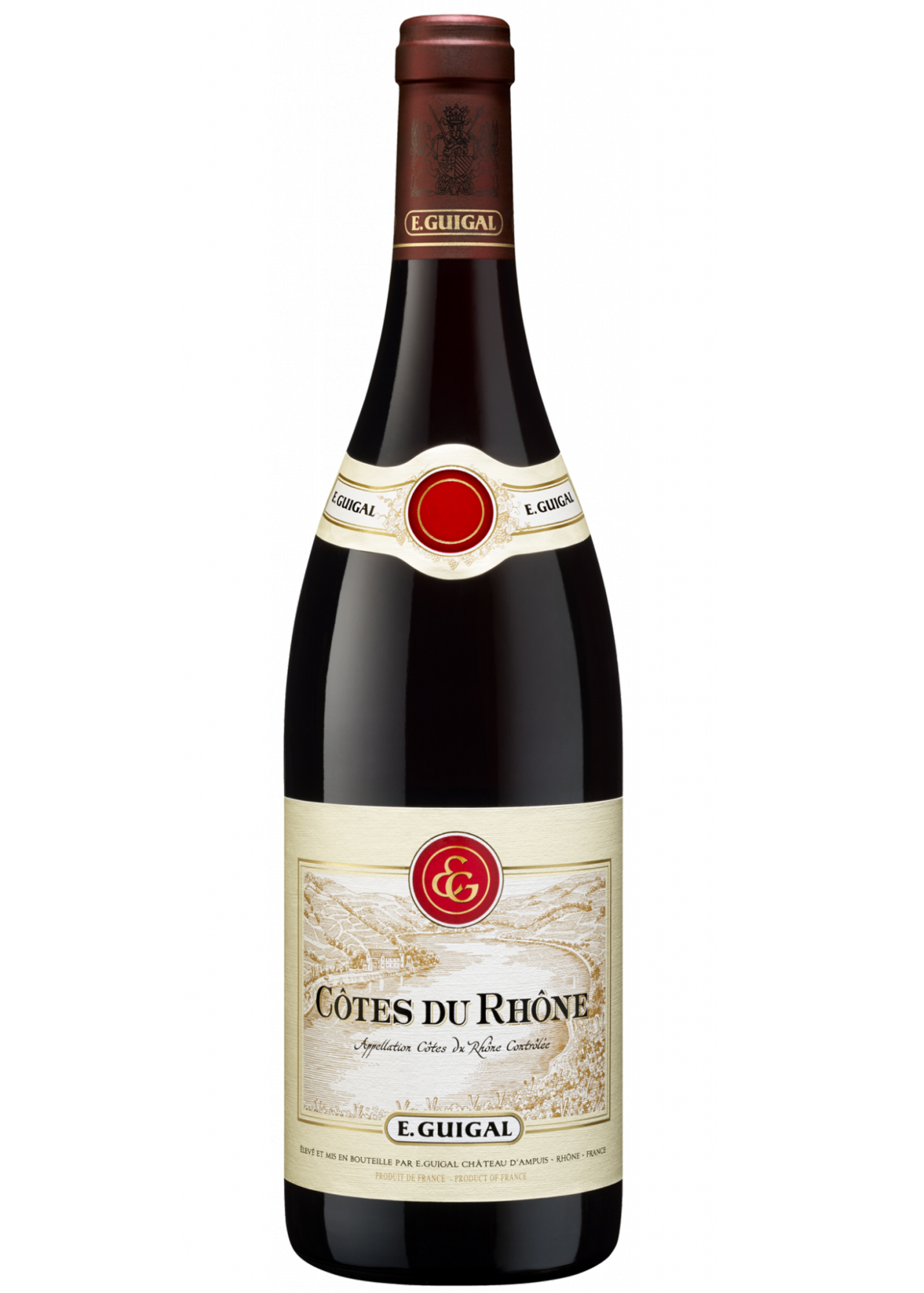
Marcel Guigal founded E. Guigal in Ampuis in 1946, and the estate has since grown into one of the most respected names in the entire Rhône Valley — a family operation now helmed by his son Philippe. Guigal is known for meticulous winemaking across every price point, from their iconic single-vineyard La La La wines down to this Côtes du Rhône, which Marcel famously believed should deliver genuine quality without compromise. That democratic philosophy is exactly what makes this bottle so compelling at $25.
Tasting Notes
This Grenache-led blend opens with inviting aromas of fresh red cherry and raspberry, lifted by a whisper of dried herbs and the wild garrigue — lavender, thyme, and scrubby hillside — that defines the southern Rhône's aromatic personality. On the palate, the wine is warm and fruit-forward, with ripe red berry flavors dancing alongside a flick of black pepper and just enough earthy spice to keep things interesting. Soft, well-integrated tannins and a bright backbone of acidity give it balance and freshness. The finish is clean and satisfying, with a lingering mineral quality that punches above this wine's modest price tag.
Producer
Founded in Ampuis in the northern Rhône, E. Guigal sources fruit for this Côtes du Rhône from trusted growers spread across the southern appellation, blending across multiple villages to achieve a consistent house style year after year. The estate is one of the rare négociant-producers with the scale and reputation to command serious grower partnerships throughout the entire Rhône Valley. While not certified organic, Guigal works closely with its growers on sustainable viticulture practices, and the winery's attention to detail in the cellar — extended aging, careful blending — is evident even in this entry-level cuvée.
Terroir
The Côtes du Rhône appellation spans a broad swath of the Rhône Valley, with the fruit for this wine drawn primarily from the sun-drenched south, where the influence of the Mediterranean climate brings generous warmth and reliable ripeness. Soils here are famously varied — galets roulés (rounded river stones), sandy loam, and clay-limestone — but the common thread is excellent drainage that stresses the vines just enough to concentrate flavor. The mistral wind, a defining force in this part of France, plays a crucial role in keeping the vineyards healthy and the wines fresh despite the heat.
Food Pairings
This is a versatile, crowd-pleasing red that shines alongside a classic charcuterie board loaded with saucisson sec, olives, and herbed chèvre — easy, no-fuss entertaining at its best. For something more composed, try it with roasted lamb chops rubbed with herbes de Provence, where the wine's garrigue notes and soft tannins find a natural mirror. It also works beautifully with a simple weeknight pasta — think a rustic tomato and Italian sausage ragù, where the wine's red berry fruit and peppery edge complement the richness of the sauce.